Undergraduate

Department of Robotics and Artificial Intelligence Engineering

The Department of Robotics and Artificial Intelligence has been opened from 2024-25. The Department is currently affiliated to Visvesvaraya Technological University, Belagavi. The department offers undergraduate courses in Robotics and Artificial Intelligence with 30 intakes.

The Department is well equipped with spacious and well-furnished classrooms, Computer-Aided design and analysis lab, CIM lab, Data Structures and Algorithms lab, Robot Programming & Simulation Lab, latest configured CAED lab connected with LAN, and library facilities. The Department has highly qualified, experienced, and committed faculty delivering quality education.  The Department takes pride in the achievements of its alumni, who have shined in various walks of life.

Overview

 Robotics and Artificial Intelligence (AI) are closely intertwined fields driving significant advancements across numerous industries. Robotics involves designing, constructing, and operating robots, which are often enhanced by AI to perform complex tasks autonomously. AI, encompassing machine learning, computer vision, natural language processing, and more, equips robots with the ability to learn from data, make decisions, and interact intelligently with their environment. Together, they enable innovations such as autonomous vehicles, industrial automation, healthcare robots, and smart home devices. The integration of robotics and AI is transforming sectors like manufacturing, healthcare, logistics, and service industries by increasing efficiency, improving safety, and enabling new capabilities previously thought to be in the realm of science fiction.

Vision

To develop Adichunchanagiri Institute of Technology as a center of excellence and to strive for continuous improvement of technical education and human resource advancement. To inculcate discipline, punctuality, and diligent industry in the minds of the students being trained in our department and make them competent and confident mechanical engineers with high self-esteem and professional ethics so that they will become worthy and respected citizens of the country.

Mission

To develop the department as a regional center of excellence in mechanical engineering and to bring out mechanical engineers with sound technical knowledge and training who can contribute significantly to the advancement of the nation in the field of industry and research.


Department Info

Department Robotics and Artificial Intelligence Engineering

HOD: Dr. Manu S S

UG Intake: 30

+91-8262- 220444 | rai@aitckm.in

Departmental Menu
PEO's
PO's
PSO’S

Program Educational Objectives (PEO’s)

  • To provide standard undergraduate education for students aspiring to pursue the Mechanical Engineering profession to seek a career in a multidisciplinary field.
  • To impart technological advancement through, conferences, workshops, technical talk, and industry-academia interaction.
  • To imbibe knowledge pertaining to social, ethical, and environmental issues in engineering practice.
  • To pursue a problem-solving approach using analytical abilities with effective communication and holistic team spirit.
  • PO1: Engineering Knowledge: Apply knowledge of mathematics, natural science, computing, engineering fundamentals and an engineering specialization as specified in WK1 to WK4 respectively to develop to the solution of complex engineering problems.
  • PO2: Problem Analysis:Identify, formulate, review research literature and analyze complex engineering problems reaching substantiated conclusions with consideration for sustainable development. (WK1 to WK4)
  • PO3: Design/Development of Solutions:Design creative solutions for complex engineering problems and design/develop systems/components/processes to meet identified needs with consideration for the public health and safety, whole-life cost, net zero carbon, culture, society and environment as required. (WK5)
  • PO4: Conduct Investigations of Complex Problems:Conduct investigations of complex engineering problems using research-based knowledge including design of experiments, modelling, analysis & interpretation of data to provide valid conclusions. (WK8).
  • PO5: Engineering Tool Usage:Create, select and apply appropriate techniques, resources and modern engineering & IT tools, including prediction and modelling recognizing their limitations to solve complex engineering problems. (WK2 and WK6)
  • PO6: The Engineer and The World:Analyze and evaluate societal and environmental aspects while solving complex engineering problems for its impact on sustainability with reference to economy, health, safety, legal framework, culture and environment. (WK1, WK5, and WK7).
  • PO7: Ethics:Apply ethical principles and commit to professional ethics, human values, diversity and inclusion; adhere to national & international laws. (WK9)
  • PO8: Individual and Collaborative Team work:Function effectively as an individual, and as a member or leader in diverse/multi-disciplinary teams.
  • PO9: Communication:Communicate effectively and inclusively within the engineering community and society at large, such as being able to comprehend and write effective reports and design documentation, make effective presentations considering cultural, language, and learning differences
  • PO10: Project Management and Finance:Apply knowledge and understanding of engineering management principles and economic decision-making and apply these to one’s own work, as a member and leader in a team, and to manage projects and in multidisciplinary environments.
  • PO11: Life-Long Learning:Recognize the need for, and have the preparation and ability for i) independent and life-long learning ii) adaptability to new and emerging technologies and iii) critical thinking in the broadest context of technological change. (WK8)

PSO.1. Apply the knowledge of basic and engineering sciences, analytical skills and modern computing technologies to design and develop robotic systems.

PSO.2. Use the concepts of Artificial Intelligence and multi-disciplinary skills to operate and control intelligent systems.

PSO.3. Apply interdisciplinary approach towards intelligent autonomous systems for societal benefits and life-long learning.

Program Educational Outcomes (PEOs)

PEO.1 Graduates will demonstrate technical proficiency and innovation in robotics with advance technologies.

PEO.2 Graduates will exhibit critical thinking and inter-disciplinary problem solving skills in research and development.

PEO.3 Graduates will exhibit the entrepreneurship competencies, lifelong learning, and human values.

Entrepreneurship and career opportunities in Robotics and Artificial Intelligence

Entrepreneurship and career opportunities in Robotics and Artificial Intelligence (AI) are burgeoning fields with significant potential for innovation and impact. Entrepreneurs can launch startups focused on developing cutting-edge AI-driven robotics solutions for industries like healthcare, manufacturing, and logistics. These startups often emerge from research labs and academic institutions, bringing novel technologies such as autonomous drones, robotic assistants, and AI-powered diagnostic tools to market. Additionally, there are opportunities in consultancy, where experts provide strategic advice on integrating robotics and AI into business operations.

On the career front, professionals in robotics and AI can pursue roles in research and development, where they innovate and refine AI algorithms and robotic systems. Engineers can specialize in areas like machine learning, computer vision, and robotic hardware design, working for tech giants, specialized robotics firms, or research institutions. Data scientists and AI specialists are in high demand to develop intelligent systems capable of processing and analyzing vast amounts of data. Moreover, positions in system integration and human-robot interaction focus on creating seamless interfaces between robots and users, ensuring practical and safe deployment in real-world scenarios.
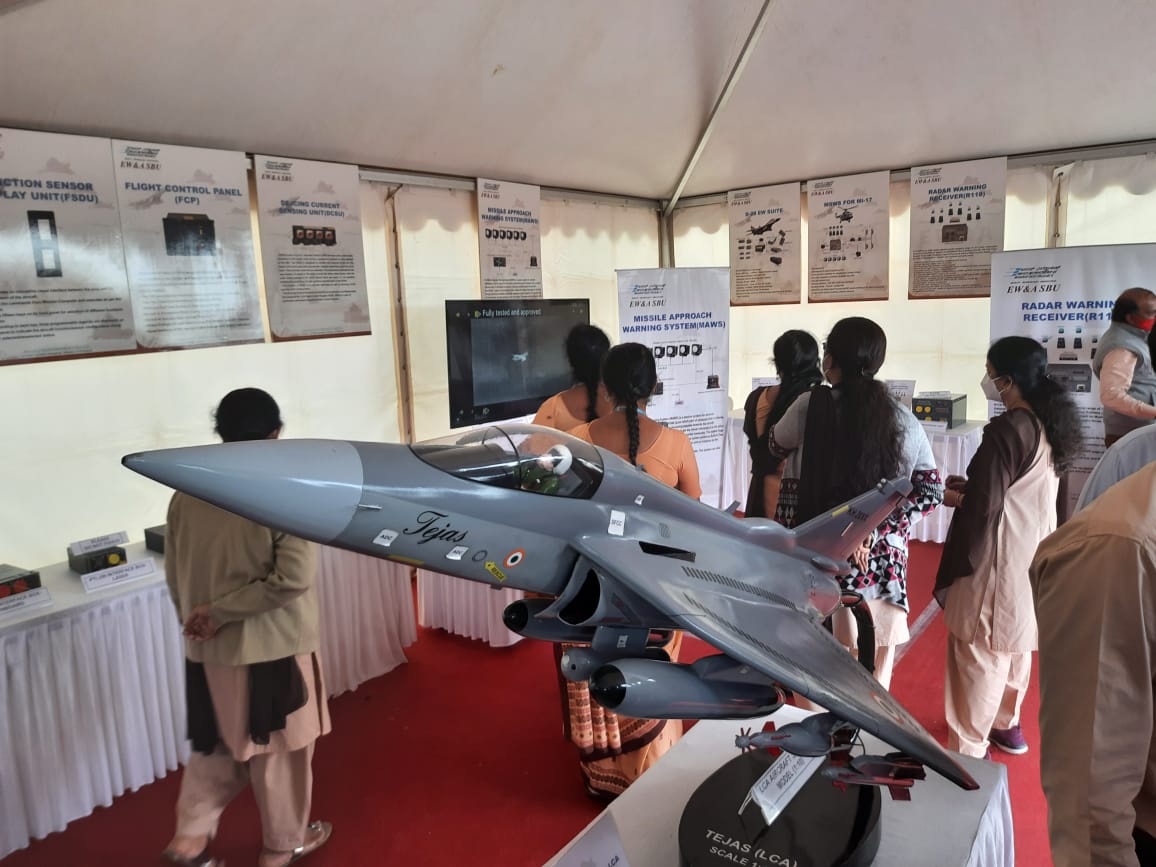
Every student’s academic journey is unique. How each chooses to take advantage of the opportunities to learn, grow, and flourish varies. Our alumni are passionate life-long learners and driven leaders, making a difference in the information field.